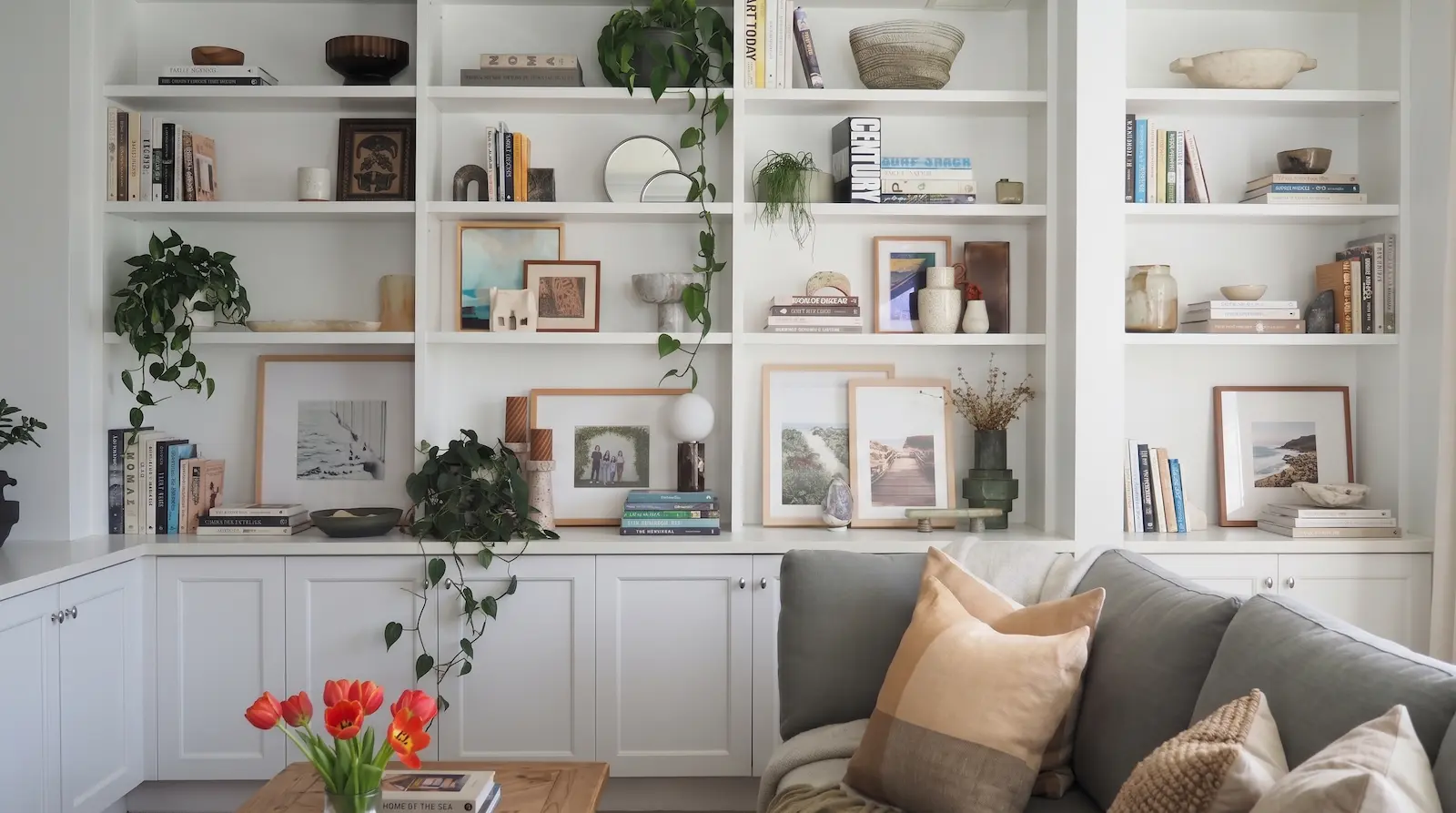
Open shelving is one of the most transformative elements in modern interior design, yet it remains one of the most intimidating to master. When done with intention, it feels like an effortless curation of travel treasures, organic textures, and everyday functional art. When done incorrectly, it quickly collapses into visual noise.
The secret behind editorial open shelves—the kind that feel quiet, grounded, and endlessly inviting—is not having more things. It is about understanding the delicate dance between proportion, materiality, and the sacred power of empty space.
1. Anchor with Scale and Weight
Before placing a single small trinket, start by anchoring the lower shelves with pieces that have visual weight. Large stoneware crocks, handmade ceramic bowls stacked in threes, or antique breadboards provide a grounding baseline.
If every object on a shelf is small, the eye never knows where to rest. Group larger vessels at opposite diagonals across different shelves to create a subconscious sense of architectural balance.
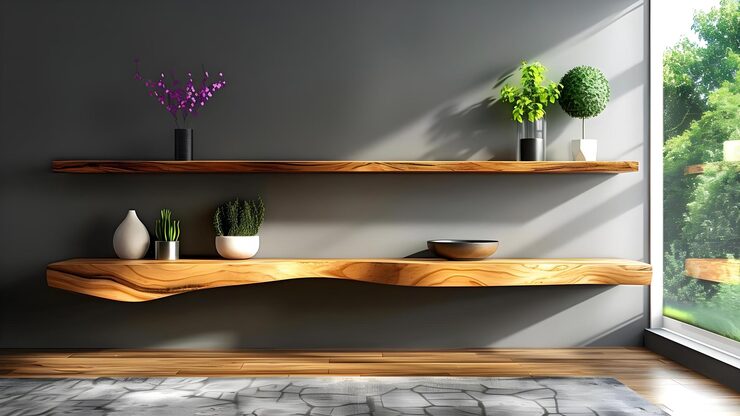
2. The Rhythm of Book Stacking and Sculptural Objects
Hardcover design books are the quiet workhorses of shelf styling. Rather than stacking them like a library catalog, play with contrasting rhythms:
- Horizontal stacks: Lay two or three linen-bound monographs flat, then crown them with a small brass object, a carved stone dish, or a hand-poured beeswax candle.
- Vertical leaners: Lean four or five cloth-bound books against an organic travertine bookend, leaving the book spines facing outward with their neutral embossed titles catching the natural light.
3. Bring the Outdoors In with Wild, Organic Foliage
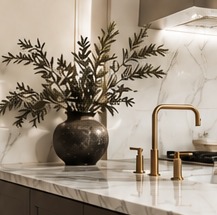
No shelf feels complete without organic movement. Avoid overly symmetrical floral arrangements; instead, opt for sculptural olive branches, wild eucalyptus sprigs, or a single weeping fern tucked inside an unglazed terracotta urn.
The soft curves of botanicals naturally break the sharp horizontal and vertical planes of the woodwork, injecting life and seasonal warmth into the space.
4. The 30% Golden Rule: Master the Negative Space
The single most common styling mistake is feeling the obligation to fill every available square inch. An editorial shelf breathes.
As a guiding rule, leave approximately 30% of the shelf surface completely untouched. This negative space is not empty—it is visual pause. It frames each curated treasure, allowing handcrafted stoneware, living brass finishes, and woven baskets to be appreciated as standalone works of art.
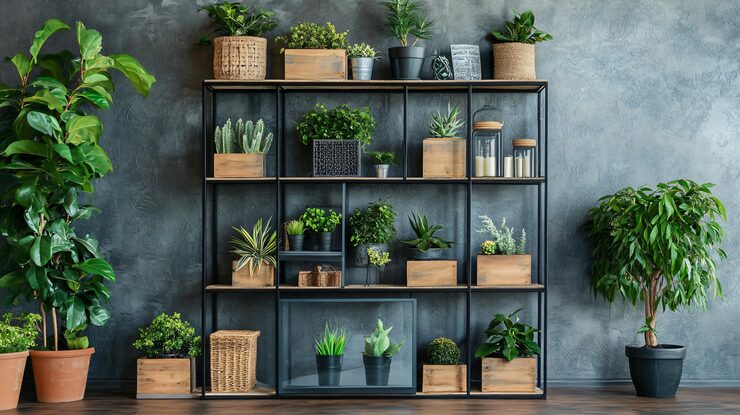
The Final Editorial Takeaway
Step back at least five paces and squint. If one side feels heavier than the other, gently redistribute until the entire composition feels as serene as a gallery wall. Shelf styling is never static—it evolves with your seasons, your rituals, and the stories you collect along the way.